
Practical, Supportive Strategies for Calmer Days and a More Balanced Life
Stress is part of being human — but when it becomes constant, overwhelming, or draining, it can affect your mood, focus, sleep, health, and overall sense of wellbeing.
Wellness-based stress management focuses on daily habits and supportive routines that help regulate your nervous system, restore balance, and strengthen resilience over time.
At Arizona Mental Wellness, we offer compassionate, personalized stress-management guidance designed to fit real life — not add pressure or unrealistic expectations.
You deserve a life that feels calmer, steadier, and more manageable.
Empowering You to Manage Stress and Enhance Well-Being
Understanding Stress From a Wellness Perspective
Stress is not only emotional — it affects your entire body and nervous system.
When stress becomes chronic, it may contribute to:
- Fatigue or burnout
- Muscle tension or headaches
- Irritability or mood swings
- Difficulty concentrating
- Digestive discomfort
- Sleep disruption
- Low motivation
- Emotional numbness or overwhelm
- Increased reliance on unhealthy coping habits
Wellness strategies help calm the stress response and support long-term nervous-system balance.
Everyday Factors That Increase Stress
Many common stressors are rooted in lifestyle patterns or unmet needs, including:
- Lack of rest or recovery time
- Poor work–life balance
- Overcommitment or people-pleasing
- Excessive screen time
- Irregular routines
- Sensory overload
- Social pressure or isolation
- Poor nutrition or dehydration
- Excess caffeine or stimulants
- Financial, health, or caregiving stress
- Grief or major life transitions
Wellness focuses on awareness first — then gradual, supportive change.

Discover Stress Relief Solutions
Wellness Strategies That Support Stress Management

2QIUQ1
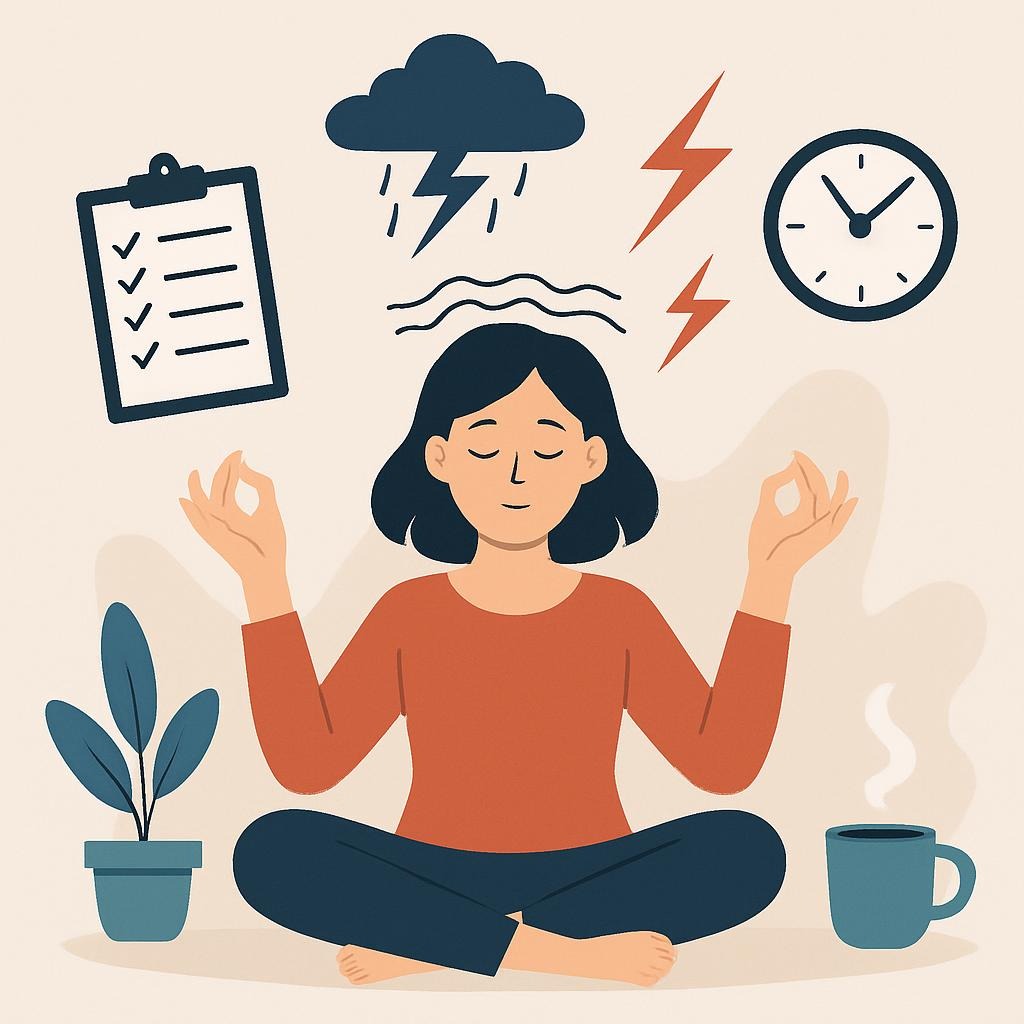
Mindfulness & Grounding
Mindfulness helps bring the nervous system out of fight-or-flight and back into the present moment.
Examples include:
- Slow, intentional movement
- Deep breathing
- Body-scan relaxation
- 5-4-3-2-1 grounding
- Guided mindfulness practices
Gentle Movement & Physical Activity
Movement helps reduce stress hormones and release physical tension.
Supportive options include:
- Chair-based movement
- Walking
- Stretching
- Tai chi or qigong
- Light yoga
- Dancing
Nutrition That Supports Stress Resilience
The body handles stress more effectively when it’s well nourished.
Helpful habits may include:
- Choosing foods that stabilize energy
- Regular meals
- Balanced snacks
- Staying hydrated
- Reducing caffeine during high stress
Predictable Routines
Routine creates safety for the nervous system.
This may include:
- Simple time-management systems
- Morning rituals
- Evening wind-down practices
- Consistent sleep timing
- Realistic daily structure
More Effective Stress Management Tools

Healthy Boundaries
Protecting your energy is a core stress-management practice.
This can include:
- Creating digital boundaries
- Saying no without guilt
- Limiting draining interactions
- Setting work-life boundaries
- Reducing emotional labor
Rest & Restoration
Stress decreases when rest is intentional and guilt-free.
Supportive rest may look like:
- Gentle disengagement from productivity
- Short restorative breaks
- Listening to fatigue cues
- Quiet downtime

Connection & Social Support
Human connection is a biological regulator of stress.
- Wellness-based connection includes:
- Community or belonging
- Time with supportive people
- Shared activities
- Safe emotional expression

Gratitude & Reflection
Gentle reflection can shift stress patterns over time.
Examples include:
- Reflecting on strengths or values
- Gratitude journaling
- Identifying small wins

Nature & Sensory Regulation
Nature and sensory calm naturally reduce stress.
Supportive options include:
- Weighted or textured sensory tools
- Time outdoors
- Sunlight exposure
- Green or water views
- Soft lighting
What Our Clients Say
Discover heartfelt stories from those who’ve found balance and calm through our personalized stress management support.
Stress Management for Neurodivergent Individuals
Neurodivergent adults may experience stress differently due to:
- Sensory overload
- Masking or camouflaging
- Executive-function demands
- Social burnout
- Emotional intensity
- Rumination or overthinking
We offer neurodiversity-affirming wellness strategies such as:
- Sensory-friendly routines
- Visual planners or schedules
- Energy mapping
- Flexible coping tools
- Predictable structure
- Strength-based stress reduction
Your stress experience is valid — and your wellness plan should fit your brain.
When Wellness Support Isn’t Enough
Wellness tools are powerful, but additional support may be helpful when stress:
- Feels unmanageable
- Disrupts sleep
- Causes panic or intrusive thoughts
- Impacts relationships or work
- Leads to emotional shutdown
- Causes physical symptoms
- Triggers anxiety or depression
Seeking support is a strength, not a failure.
You Deserve Calm, Balance, and Support
With compassionate guidance and realistic habits, stress can become more manageable and less overwhelming.
Wellness is not about eliminating stress — it’s about learning how to move through life with greater steadiness and self-trust.
Wellness-based stress management focuses on daily habits, routines, and lifestyle strategies that help regulate the nervous system and build resilience over time
Yes. Many people experience meaningful stress reduction through mindfulness, movement, routines, nutrition, and boundary-setting. Medication may help when stress is severe or persistent.
Chronic stress keeps the nervous system in a heightened state, which can disrupt sleep, digestion, mood, and immune function.
Small improvements can happen quickly, but lasting stress reduction usually develops gradually as habits and routines become consistent.
If stress interferes with sleep, work, relationships, or emotional wellbeing, therapy or psychiatric care may provide additional support.